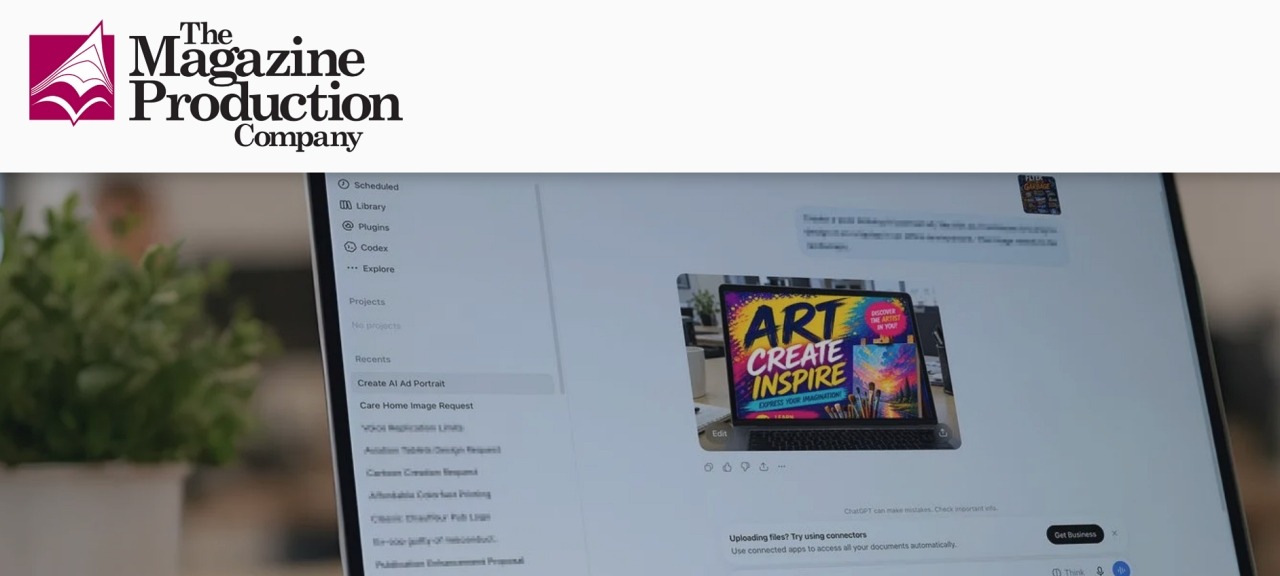
Customers are turning up with AI artwork that won't print, we’re all seeing it every day.
That isn't a threat to our trade though, it's the biggest invitation we've had in thirty years, and too many printers are slamming the door on it.
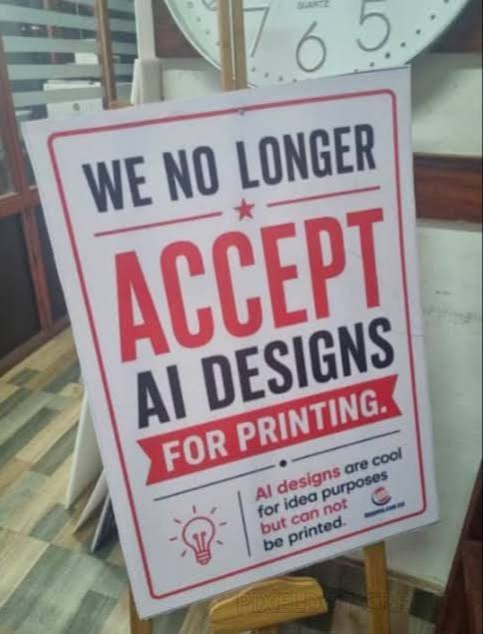
Walk into any print shop right now and you'll hear the same complaint. Customers are generating leaflets, posters and menus with AI, then handing over files that are RGB, low resolution, with no bleed and text running straight off the edge. The reaction across the industry has been to roll eyes, fire off rejection emails loaded with technical terms, and quietly add "no AI artwork" on the reception walls. That is exactly the wrong response.
We've been here before
Anyone who was in print in the early nineties remembers the arrival of Microsoft Word and Publisher. Suddenly every business owner was a designer, and the files were a joke: missing fonts, the wrong page size, clip art pulled from a disk, and not a millimetre of bleed anywhere… oh, and designs that looked like something from a Primary Two competition.
Plenty of printers moaned. The smart ones didn't, they sat the customer down, showed them how to set the job up, fixed what needed fixing and kept that customer for twenty years.
But the real skill was taking that opportunity to show the customer that REAL design is a SKILL and using that as an UPSELL opportunity as well.
The printers who said no? Ask yourself how many of them are still trading.
AI is selling print for us
Here's what the moaners are missing. People who'd never have paid a designer are creating printed material because AI made it easy. They want leaflets, flyers, menus and signs. They want to BUY print. That is new demand walking through the door, and every time we say no, it walks straight back out to an online printer who will take the file, print it badly and keep the customer anyway.
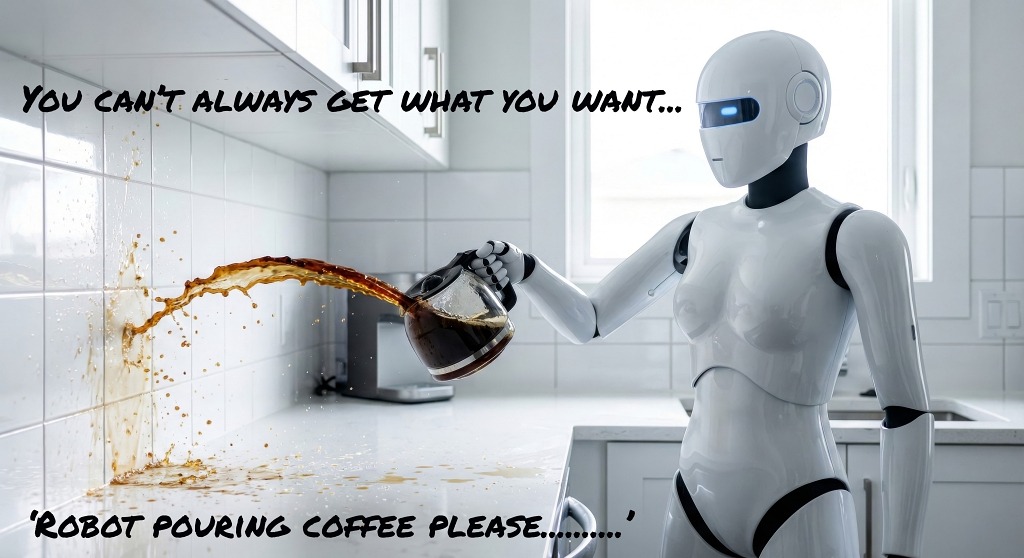
The problem isn't AI. AI does exactly what it's told.. and that’s the key. The problem is that nobody has told it what a print-ready file looks like, because the customer doesn't know either. That isn't their failing. It's ours, because we're the ones with the knowledge.
Give a capable AI assistant a proper brief, covering trim, bleed, safe area, colour profile and resolution, and it will build a PDF to that spec more consistently than most people do. It won't make a 1,024-pixel image sharp across a full-bleed A5 page, where it lands at about 120ppi, but it will flag the problem before the file ever reaches you.
Stop saying no. Start showing how.
Write the brief once, hand it to every customer, and let them paste it into whatever AI tool they're using. You've turned a rejected file into a right-first-time job, and a frustrated customer into one who thinks you're the only printer who helped.
Say yes when everyone else says no. That's how you win.
How to build your own AI print script
1. Start with your preflight. Write down exactly what your prepress team checks: trim, bleed, safe area, colour profile, ink limit, image resolution and PDF standard.
2. Use numbers, not jargon. "A5 trim of 148 × 210 mm with 3mm bleed on every edge, making the page 154 × 216 mm" beats "include bleed".
3. Tell it to flag, not fudge. The AI should report any image under 300ppi at placed size, any RGB colour and any text inside the 5mm safe margin.
4. One script per product: A5 leaflet, business card, roller banner, each ready to copy and paste.
5. Point customers at the right tool. An image generator makes pictures. An AI assistant that can create files makes PDFs.
6. Test it yourself. Run each script through the AI tools your customers use, preflight the output, and fix the script wherever the file fails.
7. Put it everywhere: website, quote emails, order confirmations, a QR code on the counter. Make it the first thing customers see, not the rejection email.
8. Keep your preflight. The script cuts the failures. Your prepress still has the final say.
One final word. AI is here to stay, get used to that. Embrace it or watch other printers that DO flourish and grow. This is an opportunity, not a threat.
.jpg)